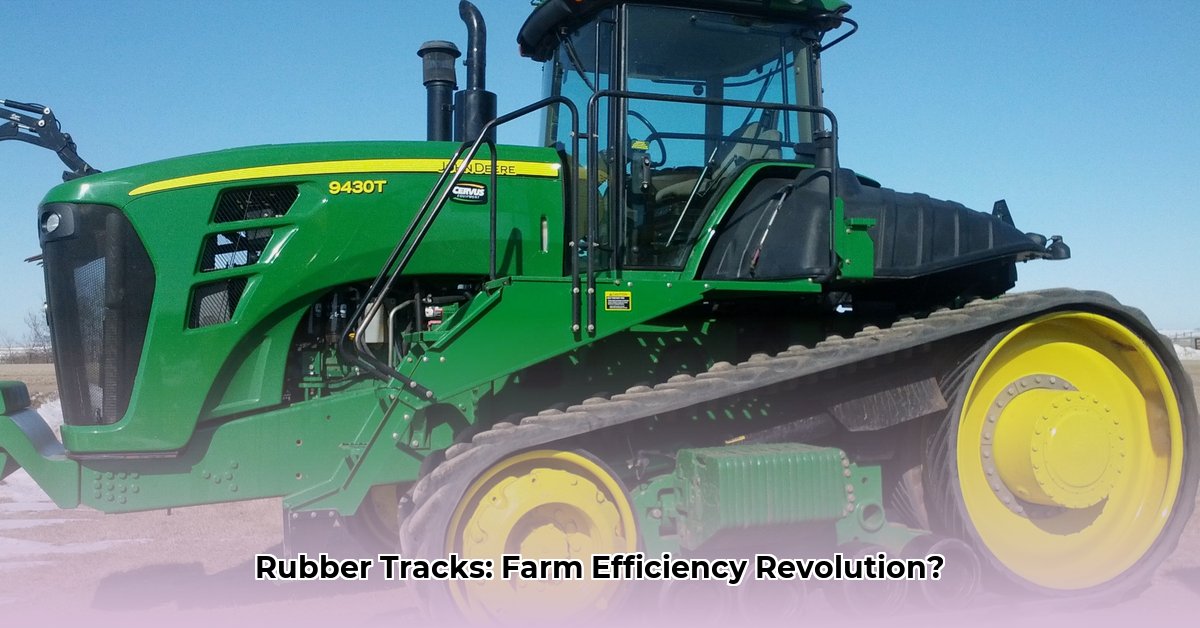
Rubber Track Tractors: A Smarter Approach to Farming
Rubber track tractors are revolutionizing agricultural practices, offering compelling advantages over traditional wheeled models. Their superior traction and reduced soil compaction contribute to increased efficiency and improved crop yields. This article presents a comparative analysis of rubber track tractors, weighing their benefits against potential drawbacks to inform farmers, dealers, and government agencies. For more information on tractor attachments, check out this helpful resource.
Reduced Soil Compaction for Healthier Crops
The wider footprint of rubber tracks distributes a tractor's weight more evenly than wheels. This significantly reduces soil compaction, promoting better water infiltration, stronger root systems, and ultimately, healthier crops. Think of it like the difference between a heavy tank and a small car traversing a field; the tank's weight is spread across a larger area, minimizing damage. This effect translates to improved soil health and enhanced crop yields. A data-driven study would ideally quantify this yield improvement, but currently, such data is limited.
Unmatched Traction for All Terrains
Rubber tracks deliver superior traction compared to wheels, particularly in challenging conditions such as muddy fields or hilly terrain. This enhanced grip minimizes wheel slippage, reducing fuel consumption and increasing operational speed. Farmers can expect to spend less time wrestling with difficult terrain and more time actively farming. How much time is saved? Further research is needed to quantify this benefit.
Extended Lifespan and Reduced Downtime
The even weight distribution provided by rubber tracks reduces wear and tear on the tractor's components. This translates to a longer lifespan, reducing maintenance needs and minimizing downtime. While the exact lifespan extension depends on various factors (see below), the potential for lower long-term maintenance costs is a significant advantage. Do you want to maximize your return on investment and minimize costly repairs? Rubber tracks offer a compelling solution.
OEM vs. Aftermarket Rubber Tracks: A Comparative Analysis
Choosing between Original Equipment Manufacturer (OEM) and aftermarket rubber tracks involves carefully weighing cost versus longevity.
Lifespan and Durability
OEM tracks generally boast superior lifespan, often exceeding 4000 operating hours, surpassing aftermarket options which may only reach 1000 hours under heavy use. This difference stems from higher-quality materials and manufacturing processes employed in OEM production. However, Dr. Anya Sharma, Agricultural Engineering Professor at the University of California, Davis, notes, "The lifespan of any track, regardless of origin, is significantly impacted by operating conditions and maintenance practices."
Cost Considerations
OEM tracks carry a higher initial price tag, potentially costing $2000 compared to $1300 for an aftermarket alternative. However, the longer lifespan of OEM tracks can offset this premium over time, particularly considering the cost of premature track failure and replacement.
Quality and Warranty
OEM tracks typically exhibit consistent high quality and come with comprehensive warranties covering defects and premature wear. Aftermarket track quality varies considerably, necessitating careful research before purchase. Warranties also vary significantly, impacting risk tolerance and cost predictability.
| Feature | OEM Parts | Aftermarket Parts |
|---|---|---|
| Price | Higher | Lower |
| Quality | Typically superior | Variable; potential for substandard quality |
| Warranty | Comprehensive | Variable; may be limited or non-existent |
| Lifespan | Longer; often exceeding 4000 hours | Shorter; variable depending on quality; often under 1000 hours |
The Environmental Impact of Rubber Tracks
While rubber tracks reduce soil compaction, minimizing environmental damage, the environmental impact of rubber production and disposal merits consideration. Microplastic release from worn tracks is a growing concern. This necessitates ongoing research into sustainable rubber compounds and environmentally responsible disposal methods. Government regulations and incentives will likely play a significant role in shaping the long-term sustainability of rubber track technology.
Making the Right Choice: A Step-by-Step Guide
Assess Farm Needs: Evaluate farm size, soil type, terrain, and typical weather conditions.
Define Budget: Factor in initial investment, potential operating cost savings, and increased yields.
Thorough Research: Compare tractor brands, models, and consult with other farmers and dealers.
OEM vs. Aftermarket Evaluation: Carefully compare the cost-benefit analysis of each, considering warranties, track lifespan, and manufacturer reputation.
Cost-Benefit Analysis: Conduct a comprehensive analysis incorporating initial cost, lifespan, maintenance, fuel efficiency and increased yields.
The decision to adopt rubber track tractors requires careful consideration. However, the potential benefits in terms of improved soil health, increased efficiency, and reduced environmental impact make them a compelling option for many farmers.